Pet Hair and Stains: When DIY Ends and a Professional Detail Begins
The short answer
Vacuuming removes loose pet hair, but hair that has worked into fabric needs friction-based extraction — rubber tools, pumice or bristle brushes, and a strong vacuum — to lift it out of the weave. Organic stains and odor require hot-water extraction, because the source is usually in the carpet padding, not on the surface.
Dogs are excellent passengers and terrible for upholstery. If you've spent an hour with a vacuum and a lint roller and ended up with a seat that still looks fuzzy, you already know that pet hair doesn't behave like normal dirt.
This is a practical guide to what works, what doesn't, and where the line sits between a Saturday afternoon project and a job worth paying for.
Why pet hair is so hard to remove
Vacuums are designed to lift loose particles off a surface. Pet hair stops being loose almost immediately.
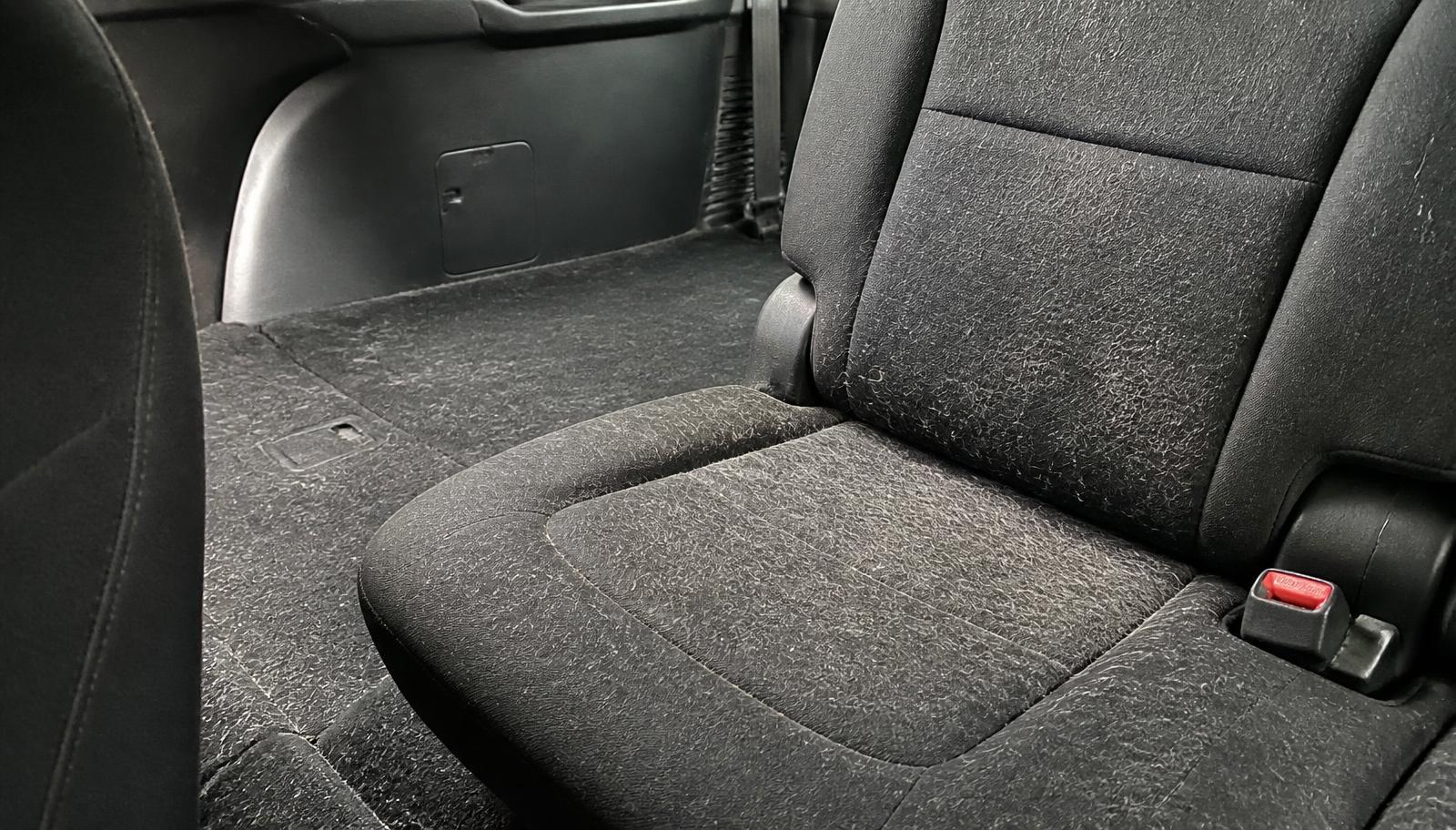
It's barbed. Animal hair has a scaled cuticle surface. Under the constant vibration of driving and the pressure of people sitting down, those scales catch on fabric fibers and ratchet the hair deeper into the weave. It works itself in and resists coming back out.
It's statically charged. Dry cabin air — especially in a Minnesota winter — builds static that binds hair to fabric and plastic. That's why hair jumps back onto a seat you just cleaned.
It hides in geometry. Seat seams, the gap between cushion and backrest, seat rails, the base of the seat belt buckle, cargo area tie-down channels, and rear cupholders collect the majority of the hair, and none of those are places a vacuum nozzle reaches naturally.
Fabric matters enormously. Woven cloth seats are the worst case — the weave has thousands of places for a barbed hair to lodge. Leather and vinyl are the best case, since hair sits on top. Carpet is in between, with the cargo area typically being the worst area in the entire vehicle.
The DIY methods, ranked honestly
Actually effective
Rubber pet-hair brush. The single best consumer tool. Firm rubber creates friction and static that drags embedded hair up to the surface where a vacuum can take it. Short strokes, always in one direction, then vacuum the pile you've raised.
Damp nitrile or rubber glove. Nearly as good and you probably own a pair. Lightly dampen, then wipe in one direction. Hair balls up and lifts. Excellent on seat bolsters and door panels.
Pumice stone (carpet only). Aggressive and genuinely effective on floor carpet where hair is truly woven in. Light pressure, short strokes. Never use one on seat fabric — it will damage the material.
Squeegee. A rubber window squeegee dragged across carpet works on the same friction principle and is surprisingly good in cargo areas.
Compressed air. Blows hair out of seams, rails, and crevices into the open where it can be vacuumed. This is how professionals get the hair you can't reach.
Marginal
Lint rollers. Fine for a suit jacket, useless on embedded hair. They only pick up what's already loose, and you'll burn through a roll on one seat.
Packing tape. Same limitation, plus it can leave adhesive residue on fabric.
Household vacuum. Better than nothing, but the hose diameter and attachments aren't designed for vehicle geometry and the suction is usually inadequate for hair that's dug in.
Don't
Fabric softener sprays. They soften static temporarily and leave a residue that attracts dirt and can stain light upholstery.
Wire brushes. They pull threads and permanently fuzz the fabric.
Excess water without extraction. Soaking fabric without a machine to pull the water back out leaves damp padding — which becomes mildew and a smell that's much harder to fix than the hair you started with.
The professional process
When we take on a heavy pet-hair vehicle, the sequence looks like this:
- Full removal. Floor mats out, cargo covers out, seats moved through their full travel to expose the rails and the area under the cushion.
- Compressed air blowout. Air pushes hair, sand, and crumbs out of every seam and crevice and into the open cabin. It looks worse before it looks better.
- Mechanical agitation. Rubber tools and brushes across every fabric surface, working hair up out of the weave section by section.
- High-suction vacuuming. Multiple passes with narrow tools that actually reach seat rails and seam channels.
- Extraction. Hot-water extraction on fabric seats and carpets — this pulls out embedded hair, dander, and the oils that hold odor.
- Hard surfaces. Steam and pH-balanced cleaners on plastics, vinyl, and leather, where hair and dander collect in textured grain.
- Final pass. Because hair that was buried migrates to the surface as the vehicle dries and settles.
The realistic time on a heavily haired mid-size SUV is two to three hours of hands-on work. That's the honest reason professional interior detailing costs what it does — it's labor, not magic chemicals.
Stains: what comes out and what doesn't
Pet owners usually have a second problem. Here's the realistic outlook by stain type.
Comes out reliably
- Mud and dirt (once fully dried and vacuumed first — never scrub wet mud)
- Coffee, soda, juice
- Most food and grease, with proper pre-treatment
- Pet accidents, if extracted thoroughly enough to reach the padding
- Salt bloom from winter boots — see our road salt guide
Sometimes comes out
- Old set-in organic stains, depending on age and fabric
- Blood, if addressed with cold water early
- Crayon and wax, with heat and solvent
- Deep dye transfer from wet denim on light seats
Doesn't come out
- Ink and permanent marker on fabric
- Bleach damage — the color is gone, not covered
- UV fading
- Burns and melted fibers
- Anything that has physically altered the fiber
We tell people this before starting rather than after. A stain that's been in a seat for three years with sunlight on it every day may lighten significantly without disappearing, and you should know that going in.
Why extraction is the whole game
The reason a stain reappears three days after you cleaned it: liquid spills don't stay on the surface. They soak through the carpet face into the backing and the foam padding underneath. When you clean the top, you remove the visible portion. The rest wicks back up as it dries.
Hot-water extraction injects cleaning solution deep into the fiber and immediately vacuums it back out, carrying the dissolved contamination with it. That's the difference between a stain that's removed and a stain that's temporarily hidden. It's the core of our interior detail.
Odor: the part nobody enjoys
Pet odor is bacterial. Organic material — saliva, dander, accidents, tracked-in moisture — feeds bacteria in the carpet padding, and the bacteria produce the smell. Air fresheners mask it, and the mask fails within days.
Actual odor removal means removing the source:
- Extract the contaminated area thoroughly, with enough passes to reach the padding.
- Clean every hard surface, including vents and the headliner, since airborne particulate settles everywhere.
- Dry the vehicle completely. Damp padding regenerates the smell faster than it was removed.
A note on ozone: some shops offer ozone generator treatments for severe odor. Ozone is effective at oxidizing odor molecules, but the EPA has documented health concerns with ozone generators and improper use can degrade rubber and plastic. We don't offer ozone treatment. Our approach is source removal — which handles the overwhelming majority of pet odor and doesn't risk your interior.
Prevention that actually works
- Seat covers or a cargo liner. The single highest-return purchase for a dog owner. Removable, washable, and they take the damage instead of your upholstery.
- A hammock-style rear seat cover. Protects the seat backs and the footwell gap where hair collects.
- Brush the dog before the ride, not after. Hair that never enters the car never needs removing.
- Keep a rubber brush in the door pocket. Two minutes after each trip prevents hair from getting driven deeper.
- Address accidents immediately. Blot, don't scrub, and get it professionally extracted soon. Time is the only variable that turns an easy job into a hard one.
- Detail every three to four months if a dog rides regularly. More on realistic intervals in how often you should detail your car.
Fabric type changes everything
The same dog produces very different results depending on what's inside your vehicle, and it's worth knowing what you're working with.
Woven cloth seats. The hardest surface. Barbed hair lodges between the threads and stays. These take the most agitation time and usually need multiple passes. They also hold odor, because the weave traps dander and oils.
Leather. The easiest by a wide margin. Hair sits on top and wipes off. The real concern with leather and pets is claw scratching and body oils, which is why we clean it with pH-balanced products rather than harsh degreasers — leather that's been stripped repeatedly dries out and cracks.
Vinyl and leatherette. Similar to leather for hair removal, more durable against claws, but it can hold odor in the perforations of ventilated seats.
Alcantara and suede. Delicate. Aggressive rubber tools can mat the nap permanently. These need light agitation and a careful hand.
Carpet, especially cargo areas. The single worst area in most SUVs. It's low-pile, high-density, and it's where the dog actually rides. Expect this to take longer than all the seats combined.
Why the second pass matters
One thing that surprises people watching us work: hair keeps appearing. That's not sloppiness — deeply embedded hair migrates upward as the fabric is agitated, vacuumed, and then dries. Hair that was buried in the weave at hour one is sitting on the surface at hour three. That's why the final pass happens after everything else is done, and why a rushed job always looks fuzzy again two days later.
The realistic outcome
On a vehicle that's carried a shedding dog for years, we'll remove the vast majority of the hair, not literally all of it. Some hair is woven so deeply into the fibers that removing it would damage the fabric. What you'll get is a seat that looks and feels clean, doesn't transfer hair onto your clothes, and doesn't smell. Anyone promising 100 percent on a five-year hair load is overselling.
When to stop DIYing
Call a professional when:
- You've spent more than an hour and the seats still look hazy with hair
- Hair is packed into seams and rails you can't reach
- Stains reappear after you clean them
- There's an odor you can smell on the first breath after opening the door
- You're preparing to sell or trade in the vehicle
- The vehicle has never been professionally cleaned
If you're anywhere in the Twin Cities metro, we come to you and handle it in your driveway. Send photos when you book so the quote reflects the actual condition — pet hair jobs vary enormously, and we'd rather price it accurately than surprise you.
Frequently asked questions
What's the best way to get dog hair out of car seats?
Friction plus suction. A rubber pet-hair brush or damp nitrile glove pulls embedded hair up out of the weave, and a strong vacuum removes it. A vacuum alone slides over embedded hair without lifting it.
Why does my car still smell after cleaning the stain?
Because the source is usually below the surface. Liquid spills soak through carpet into the padding, and bacteria in the padding keeps generating odor until the padding itself is flushed and extracted.
Can all car stains be removed?
Most organic stains — food, drink, mud, pet accidents — come out with proper extraction. Dye transfer, ink, bleach damage, and long-term UV fading are permanent because the fibers themselves are altered.
How much does pet hair removal cost?
It's included in our interior detail, which starts at $180 depending on vehicle size. Severe hair loads add labor time, so we ask for photos when booking so the estimate is accurate.
Mobile detailing, at your driveway
Serving Minneapolis, St. Paul, and the surrounding suburbs. See your exact price in under a minute.