What Minnesota Road Salt Really Does to Your Car (and How to Stop It)
The short answer
Road salt and liquid brine accelerate rust by keeping moisture on metal and lowering the temperature at which corrosion continues. In Minnesota, wash your vehicle — including the undercarriage — every 10 to 14 days through winter, always after a thaw, and remove interior salt stains with hot-water extraction rather than surface wiping.
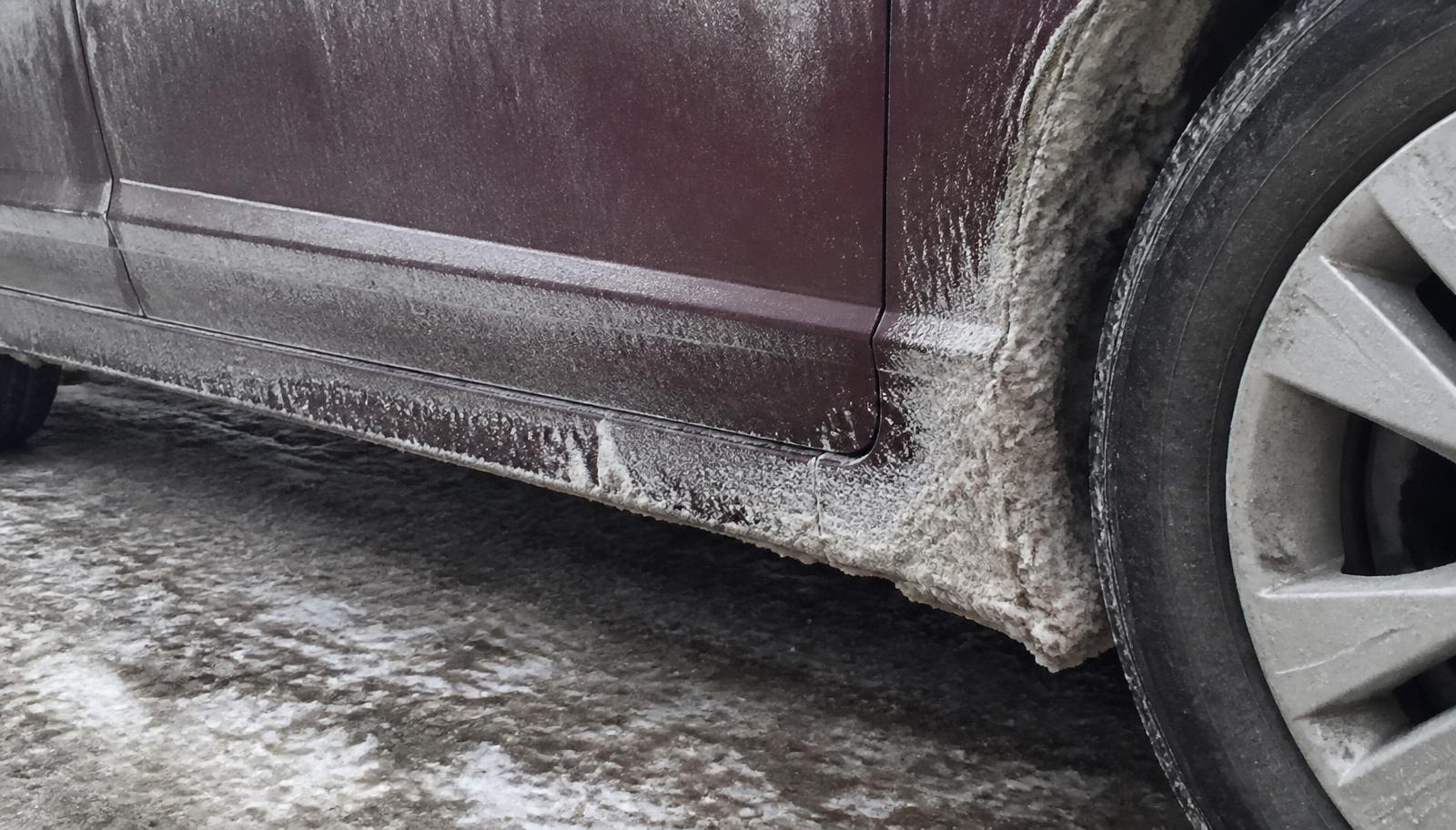
If you've owned a car in Minnesota for more than a couple of winters, you've watched it happen. A white haze creeps up the rocker panels. The wheel wells cake over with gray slush. And on the driver's floor mat, a chalky tide line appears that no amount of scrubbing seems to remove permanently.
That's road salt. The Minnesota Department of Transportation and county crews put down enormous quantities of salt and liquid brine every winter for good reason — it keeps people alive on icy roads. But the same chemistry that keeps you out of the ditch is quietly eating your vehicle from the bottom up.
Here's what's actually happening, which parts fail first, and what genuinely prevents it.
The chemistry, briefly
Rust is an electrochemical reaction. Iron in your car's steel gives up electrons to oxygen in the presence of water, and the result is iron oxide — rust. Bare steel exposed to clean water rusts slowly. Salt changes that in two ways.
First, dissolved salt makes water an excellent electrolyte. Electrons move far more easily through salty water than through fresh water, so the reaction accelerates sharply.
Second, salt brine lowers the freezing point of water. That's the entire point on a roadway, but it means the underside of your vehicle stays wet at temperatures where it would otherwise be frozen and inert. A frozen car isn't rusting much. A car sitting at 28°F coated in active brine absolutely is.
This is also why the most damaging days of a Minnesota winter aren't the coldest ones. They're the 35°F thaw days in February when everything melts, refreezes, and the salt on your undercarriage goes back into solution.
Brine deserves special attention
Pre-treating roads with liquid brine before a storm has become standard practice because it works. The downside for vehicle owners is that liquid coats differently than rock salt. It gets into seams, sprays up into the frame, and dries into a film that clings to everything it touched. It's why your car can look dusty-white after a dry, sunny January day with no snowfall at all.
What fails first
In order of how often we see it on Minnesota vehicles:
1. Rocker panels and lower doors. The lowest painted surfaces catch the heaviest spray. Once a stone chip breaks the paint, salt water sits in the wound and works outward under the paint film. The bubbling paint you see is rust that's already well established underneath.
2. Wheel wells and fender liners. Slush packs behind plastic liners and stays there for weeks, held against bare metal in the dark.
3. Brake lines and fuel lines. These are the ones that matter for safety and cost. Steel lines run the length of the vehicle, exposed, and a corroded brake line is a failed inspection and a serious hazard.
4. Exhaust components and hangers. Hot metal plus salt spray is a brutal combination. Rusted hangers drop exhaust sections.
5. Subframes and suspension mounting points. Slow, expensive, and often the reason an otherwise fine 12-year-old vehicle stops being worth repairing.
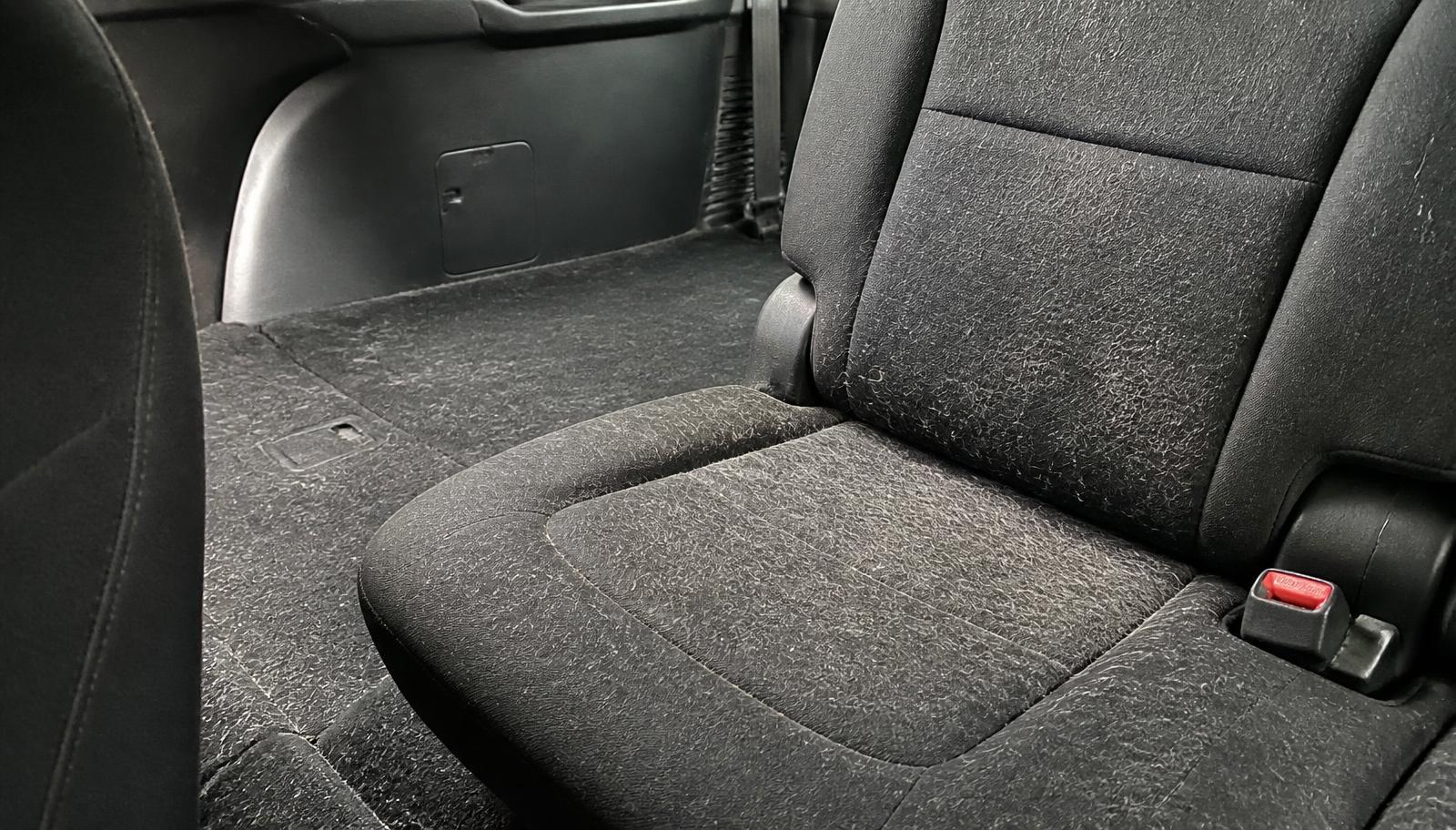
6. Your interior. Not structural, but the part you look at daily. Salt tracks in on boots, dissolves into carpet fibers, and recrystallizes as it dries — leaving white bloom lines that get worse every week you ignore them.
The washing schedule that actually protects a vehicle
The rule that works in this climate:
- Every 10 to 14 days through the salt season, minimum.
- Always within 48 hours of a thaw. This matters more than the calendar.
- Always after a storm followed by brine treatment.
- Always before the vehicle sits. Parking a salted car in a heated garage for a week is one of the worst things you can do — you've created a warm, wet, salty environment and given it seven days to work.
Every wash should include an undercarriage rinse. If you're using a self-serve bay, spend real time with the wand pointed up at the frame rails, behind the wheels, and along the rocker seams. That's where the damage starts.
Where automatic washes help and hurt
An automatic wash with an undercarriage spray is far better than not washing at all. The trade-off is the brushes. Tunnel washes drag grit across your paint hundreds of times a season, which is a large part of why so many Minnesota cars develop a dull, swirled finish by year three.
Touchless washes are gentler on paint but rely on stronger chemicals and often don't fully remove bonded film.
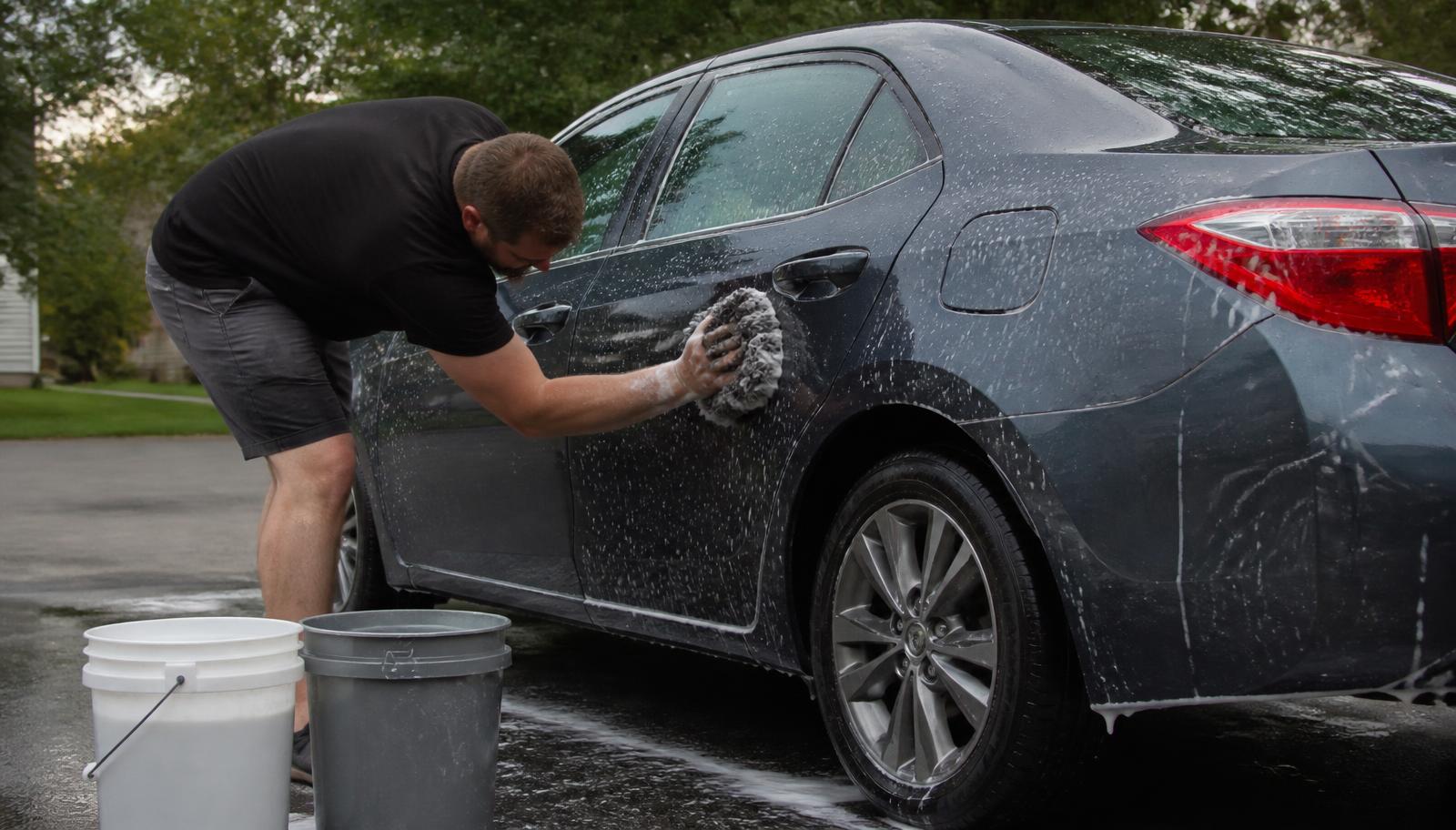
A hand wash removes contamination without grinding it into the clear coat. That's the reason our exterior detail uses a foam pre-wash and a two-bucket method — dirt gets lifted and carried away rather than dragged.
Protection: what's worth the money
Wax or sealant. A sealant layer gives salt spray something to sit on other than your clear coat, and it makes the next wash dramatically easier. In Minnesota, plan on a fresh application in late fall before the first salt run and again in spring. This is included in our exterior and full details.
Paint chip repair. The cheapest rust prevention that exists. A $15 touch-up pen on a rock chip in November prevents a $900 rocker panel repair three winters later. Do it before winter, not after.
Undercoating and oil spray. Annual oil-based undercoating (the kind that stays soft and creeps into seams) is genuinely effective in salt states. Hard rubberized undercoating is more controversial — if it cracks, it traps moisture against metal and makes things worse. If you're keeping a vehicle long-term in Minnesota, an annual oil spray is worth pricing out.
Drain holes. Every door and rocker panel has drain holes at the bottom. They clog with debris, and then your doors hold water. Clearing them takes two minutes with a zip tie and prevents doors rusting from the inside out.
The interior salt problem
This is the part we get called about most, and the part most people handle wrong.
Those white bloom lines on your carpet and floor mats are not a surface stain. Salt dissolved in melted snow soaks deep into the carpet backing, then the water evaporates and leaves crystals behind throughout the fiber depth. When you scrub the top with a towel and a household cleaner, you dissolve the surface crystals, they wick back up as the carpet dries, and the stain "returns" in 24 hours. It never actually left.
The fix is mechanical:
- Dry vacuum first, thoroughly, to remove loose grit and sand.
- Re-dissolve the salt with a cleaning solution applied properly to the fiber depth.
- Extract with a machine that injects and immediately pulls the solution — and the dissolved salt — back out.
- Repeat on heavy areas, because one pass rarely gets it all.
- Dry properly. Damp carpet in a Minnesota winter means mildew and a smell you'll fight for months.
That's the extraction step in our interior detail, and it's the reason interior work is our busiest service between January and March. Rubber all-weather mats help enormously going forward, but they don't fix carpet that's already saturated.
A note on floor mat mistakes
Two things we see constantly: stacking a rubber mat on top of a soaked carpet mat (which traps the moisture against the floor pan and rusts it from inside), and running the heat on the floor vents to "dry it out" without extraction (which just recrystallizes salt faster). Pull the mats out, let the carpet get properly extracted, and start clean.
Common winter mistakes
A few habits that make salt damage worse, all of them well-intentioned.
Washing only when the car looks dirty. Brine film is nearly invisible on light-colored vehicles, especially on dry, sunny January days. The car can look fine and be coated. Wash on a schedule, not on appearance.
Skipping the undercarriage to save time. The visible paint is not where a Minnesota vehicle dies. Frame rails, brake lines, and subframes are, and they're the parts you never look at.
Parking a salted vehicle in a heated garage for a week. You've created ideal corrosion conditions: warmth, moisture, and an active salt solution, with seven uninterrupted days to work. If the car is going to sit, wash it first.
Using hot water on frozen glass or paint. Thermal shock can crack glass and stress trim. Let the vehicle warm gradually.
Stacking wet mats. A soaked carpet mat under a rubber mat holds water against the floor pan. That's how floor pans rust from the inside, which is both expensive and invisible until it's severe.
Ignoring the wheel wells. Packed slush behind fender liners is the highest-concentration salt deposit on the entire vehicle and it can stay there for weeks at a time.
Waiting until spring to deal with the interior. Salt in carpet is not inert. Every thaw cycle re-wets it, and it works deeper. A January interior detail removes months of accumulation before it sets.
If rust has already started
Surface rust on a rocker panel or wheel arch is not a lost cause, but time matters enormously. Bubbling paint means the corrosion is already underneath and spreading laterally. Detailing won't fix it — that's body work — but catching it while it's the size of a quarter is a fundamentally different repair than catching it when the panel is perforated. When we detail a vehicle and see early rust, we point it out, because six months of delay in this climate is the difference between a small job and a large one.
A realistic Minnesota winter routine
- Late October / early November: full detail with a fresh sealant, repair rock chips, clear drain holes, install rubber mats.
- Every 10–14 days, December through March: wash with undercarriage rinse.
- Within 48 hours of any thaw: wash, no exceptions.
- January or February: interior detail with hot-water extraction to pull out accumulated salt before it sets for the rest of the season.
- April: full spring detail to strip winter film, decontaminate paint, and reset for summer.
None of this is glamorous. It's just the maintenance a vehicle needs to survive in a state that dumps corrosive chemicals on the roads for five months a year — and the difference between a 10-year-old car with clean rockers and one that's rotting from the wheels up.
If your carpets already have the white lines and your paint hasn't seen protection since last summer, book a detail and we'll come to you.
Frequently asked questions
How often should I wash my car in a Minnesota winter?
Every 10 to 14 days is the practical target, and always within a couple of days of a thaw or a fresh brine application. Salt does the most damage when temperatures rise above freezing and the residue turns back into an active salt solution.
Does road salt actually cause rust?
Salt itself doesn't rust metal, but it dramatically accelerates the process. Dissolved salt makes water conductive, which speeds the electrochemical reaction that turns steel into iron oxide, and it keeps roads wet at temperatures where they'd otherwise be dry.
How do I get white salt stains out of car carpet?
Surface wiping only redistributes them. The stains are crystallized salt that has soaked deep into the fibers, so they need to be re-dissolved and pulled out with a hot-water extractor. That's why they reappear a day after you scrub them by hand.
Is an undercarriage wash worth it?
Yes — it's the single highest-value winter wash for a Minnesota vehicle. The frame rails, subframe, brake lines, and exhaust hangers collect the most salt and are the components most expensive to repair when they corrode.
Mobile detailing, at your driveway
Serving Minneapolis, St. Paul, and the surrounding suburbs. See your exact price in under a minute.