The Spring Detail Checklist Every Minnesota Car Needs After Winter
The short answer
A proper spring detail in Minnesota removes bonded salt and road film from paint and undercarriage, decontaminates the clear coat with a chemical wash and clay treatment, extracts salt out of carpets and seats, and reapplies a sealant. Mid-April through May is the ideal window, once nightly temperatures stay reliably above freezing.
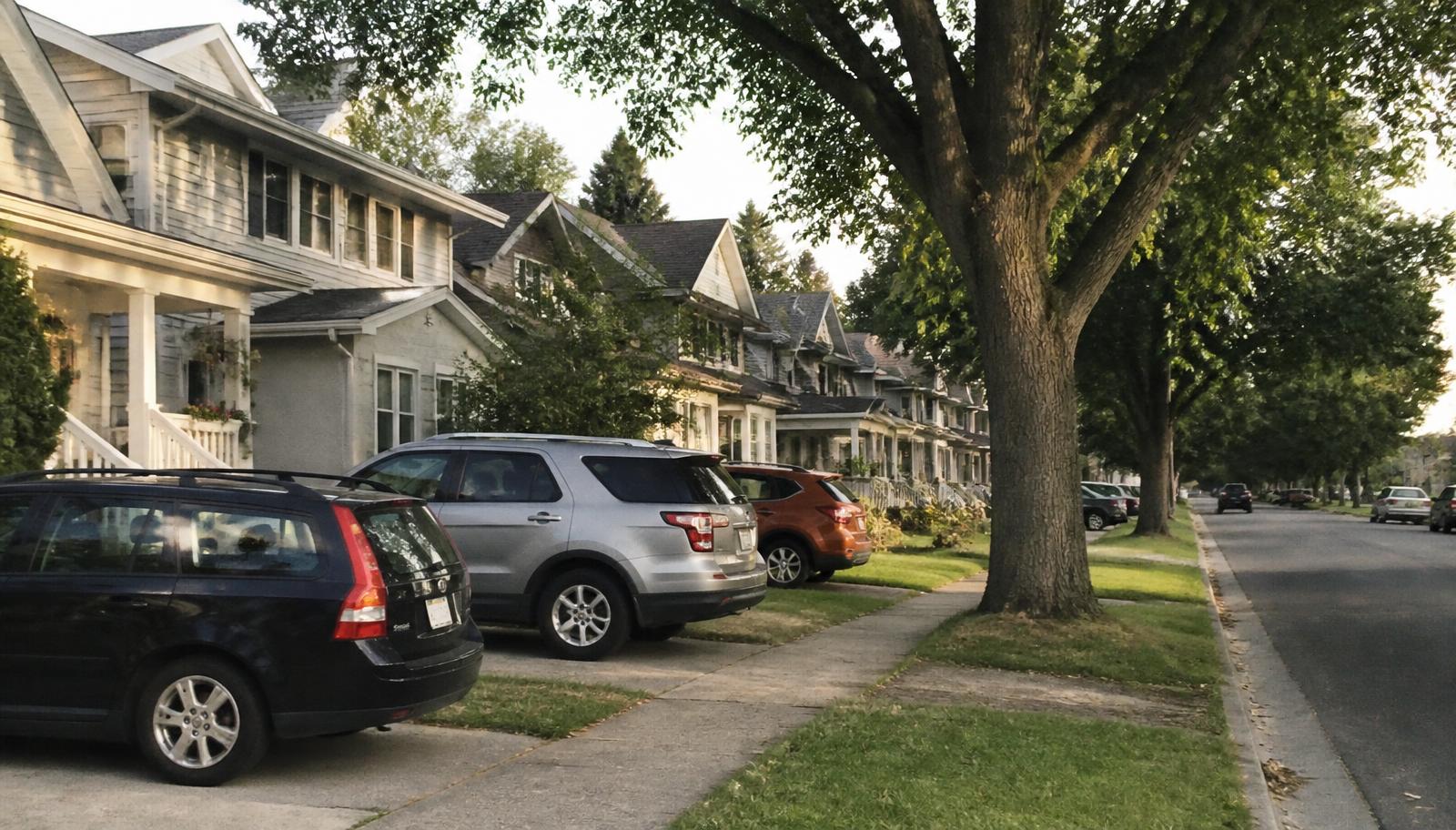
There's a specific day every spring in Minnesota when the snow finally clears, the sun comes out at an angle it hasn't hit in months, and you look at your car in the driveway and think: how did it get like that?
Five months of salt, sand, brine, slush, and sunless gray have left a film on every surface, inside and out. A trip through a tunnel wash makes it look better for about a day. What it actually needs is a reset — a methodical removal of everything winter put on and in the vehicle, followed by fresh protection for the season ahead.
Here's the checklist we work through, in order, and why each step matters.
Timing: when to do it
Mid-April through the end of May is the window.
Going too early is the most common mistake. If crews are still salting — and in Minnesota that can run into early April — you're stripping and sealing a vehicle that's about to be recoated. Sealants also cure poorly in cold, and applying protection to a panel below about 50°F gives you a fraction of the durability you paid for.
Waiting too long has its own cost. Salt sitting in your undercarriage doesn't go dormant in April; it keeps working every time the car gets wet. And bonded contamination gets harder to remove the longer it bakes.
The practical rule: once overnight lows are consistently above freezing and the salt trucks have parked for the season, book it.
Step 1: Undercarriage first
Most spring wash-ups start with the paint. We start underneath, because that's where the damage is happening.
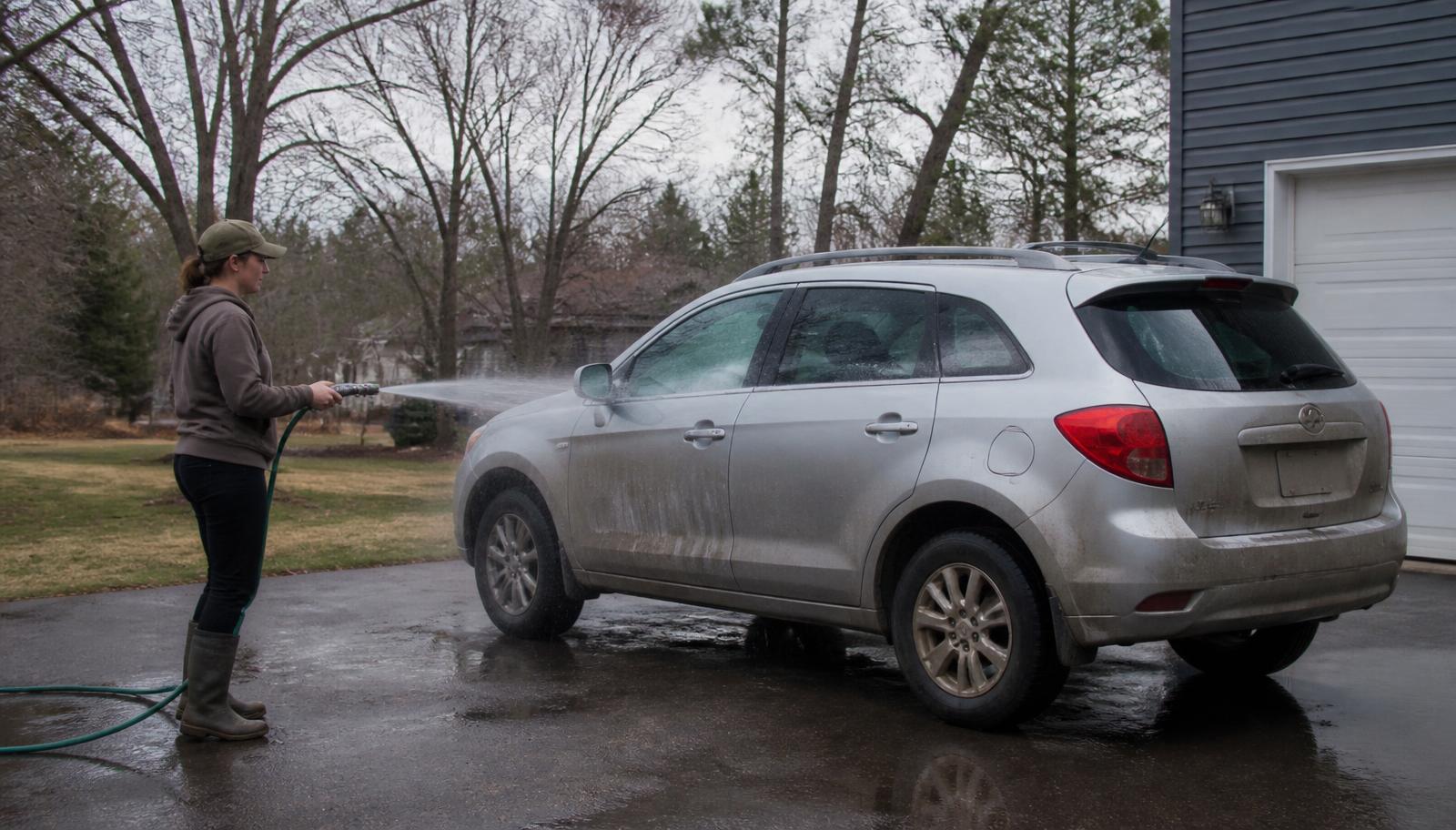
A winter's worth of salt packs into frame rails, behind fender liners, along rocker seams, and around suspension components. It doesn't rinse off in a five-second automatic undercarriage spray. It needs sustained pressure aimed up into those areas, working the packed slush and grit out of the cavities where it's been sitting since December.
This step does nothing for how the car looks. It does more for how long the car lasts than everything else combined. Our road salt guide explains the corrosion chemistry in detail.
Step 2: Wheels, tires, and wells
Wheels come next, always before the paint, because they're the dirtiest part of the vehicle and you don't want that contamination migrating.
After winter, wheels carry a mix of brake dust, road salt, and embedded iron particles. Brake dust isn't just dirt — it's hot metal fragments that physically embed in the wheel finish. A dedicated wheel cleaner dissolves them; a soap-and-sponge pass does not.
Wheel wells and fender liners get cleaned out too. That's where the packed slush lives, and where it holds moisture against metal for weeks.
Step 3: Foam pre-wash and hand wash
Now the paint. A foam pre-wash covers the vehicle and dwells, softening and lifting the winter film so it can be rinsed away before anything physically touches the surface.
This is the step that protects your clear coat. After winter, your paint is coated in gritty road film. Dragging a mitt across that grit without a pre-wash grinds it into the clear — which is exactly how cars accumulate the swirl marks that show up in direct sunlight.
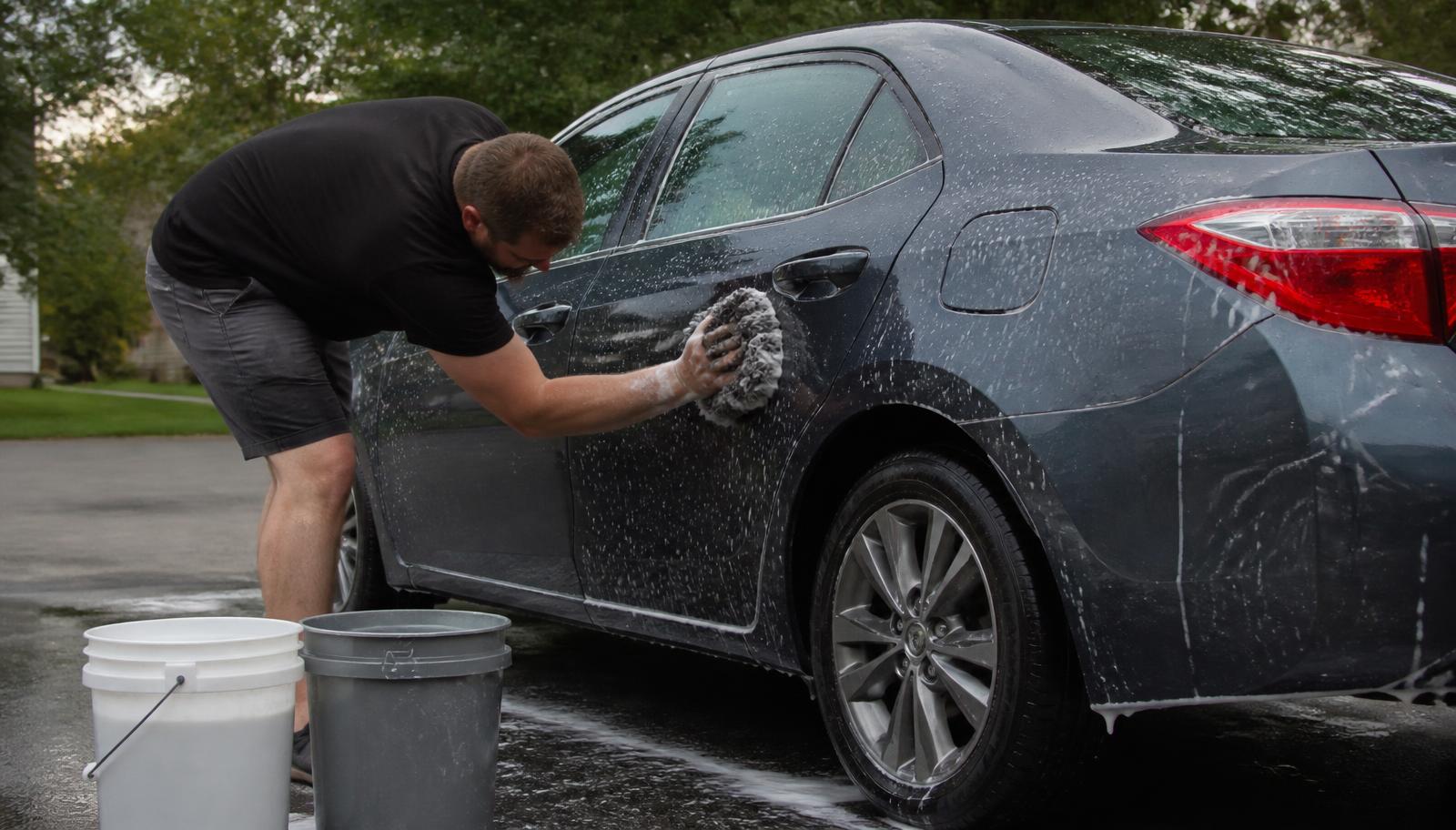
The wash itself uses the two-bucket method with a pH-neutral shampoo: one bucket of soap, one of clean rinse water with a grit guard, so dirt comes off the mitt instead of going back onto the car. Panel by panel, top to bottom.
Step 4: Decontamination — the step people skip
Wash your car in spring, run your hand across the hood, and it still feels gritty. That texture is bonded contamination, and no amount of washing removes it.
Three types build up over a Minnesota winter:
Iron particles. Brake dust and rail dust from road spray embed in the clear coat and begin oxidizing in place. A dedicated iron remover dissolves them chemically — it's the product that turns purple as it reacts.
Industrial fallout and road film. A microscopic layer of everything a highway throws at a vehicle.
Tree sap and organic residue. Particularly heavy in spring in tree-lined neighborhoods.
Removing bonded contamination requires a chemical decontamination step followed by clay treatment, which physically shears off what remains. The difference is immediate and obvious: paint goes from gritty to glass-smooth.
This matters beyond feel. Sealant applied over bonded contamination bonds to the contamination, not to your paint, and fails early. Decontamination is what makes the protection step actually work.
Step 5: Paint-safe dry
Drying gets rushed constantly, and it's a top cause of fine scratching. A dirty or cheap towel dragged across paint undoes the careful washing you just did.
Plush microfiber towels, laid on and pulled gently rather than scrubbed, with frequent towel changes. Water is blown out of mirror housings, badges, and trim seams so it doesn't run down and streak an hour later.
Step 6: Protection
With clean, decontaminated, dry paint, a sealant or wax goes on. This is the layer that:
- Takes the abuse from UV, sap, bugs, and rain instead of your clear coat
- Makes water bead and sheet off, carrying dirt with it
- Makes every wash for the next several months easier and safer
- Restores real depth and gloss to the finish
Summer protection is doing genuine work in Minnesota — long daylight hours, high UV, tree sap, and bug season all attack unprotected clear coat.
Step 7: Glass
Winter glass is its own category of miserable: salt spray, wiper fluid residue, and interior film from defrost cycles. Both sides get cleaned, and the interior side of the windshield matters most — that hazy film is what turns oncoming headlights into a starburst at night.
Wiper blades should be inspected here too. Minnesota winters destroy them, and a torn blade will chatter across your freshly cleaned glass all summer.
Step 8: Interior — the salt extraction
Inside, spring cleaning is mostly about salt.
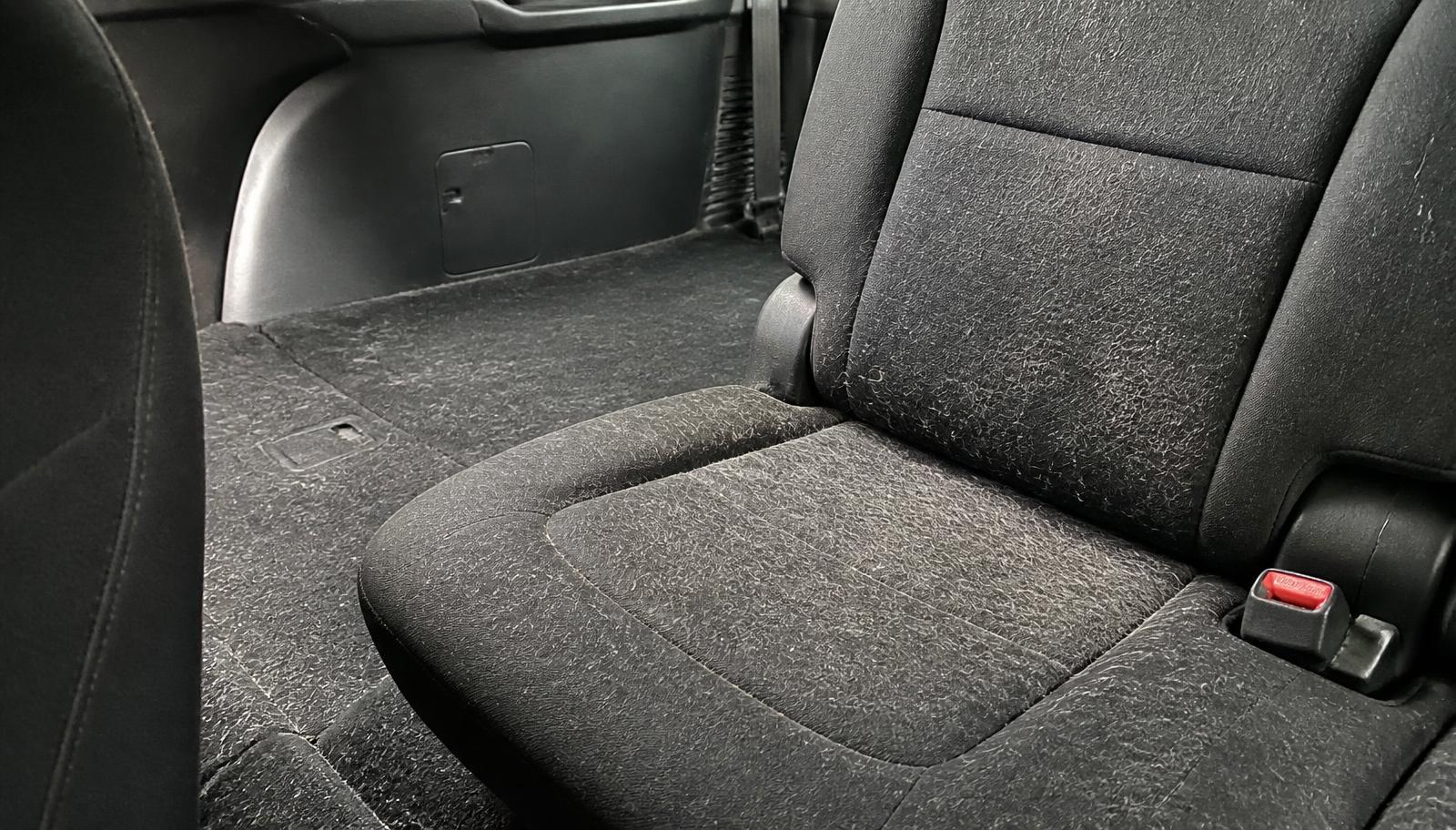
The white bloom lines on your carpets are crystallized salt that soaked deep into the fibers and dried in place. Wiping the surface dissolves the top layer, which wicks back up and reappears within a day. It has to be re-dissolved and physically extracted.
The interior sequence:
- Mats out, loose items removed, full vacuum including under the seats and in the seat rails
- Compressed air through vents, seams, and crevices to move embedded grit into the open
- Hot-water extraction on carpets and fabric seats — multiple passes on the salt lines
- Plastics, vinyl, and dash cleaned with pH-balanced products
- Leather cleaned with pH-balanced products, never harsh degreasers
- Steam on vents, buttons, console, and cup holders
- Interior glass last, so nothing overspray-related lands on it
- Proper drying so nothing goes damp into a closed car
The details of our interior process are on the interior detail page.
Step 9: The small things
The finishing items that separate a detail from a wash:
- Door jambs. Filthy after winter, visible every time you open a door, and part of our exterior detail.
- Fuel door and trunk sill. Same reason.
- Exterior trim. Winter fades black plastic gray. Cleaning and dressing it restores the contrast.
- Tire dressing. Non-sling, so it doesn't fling onto your clean paint on the first drive.
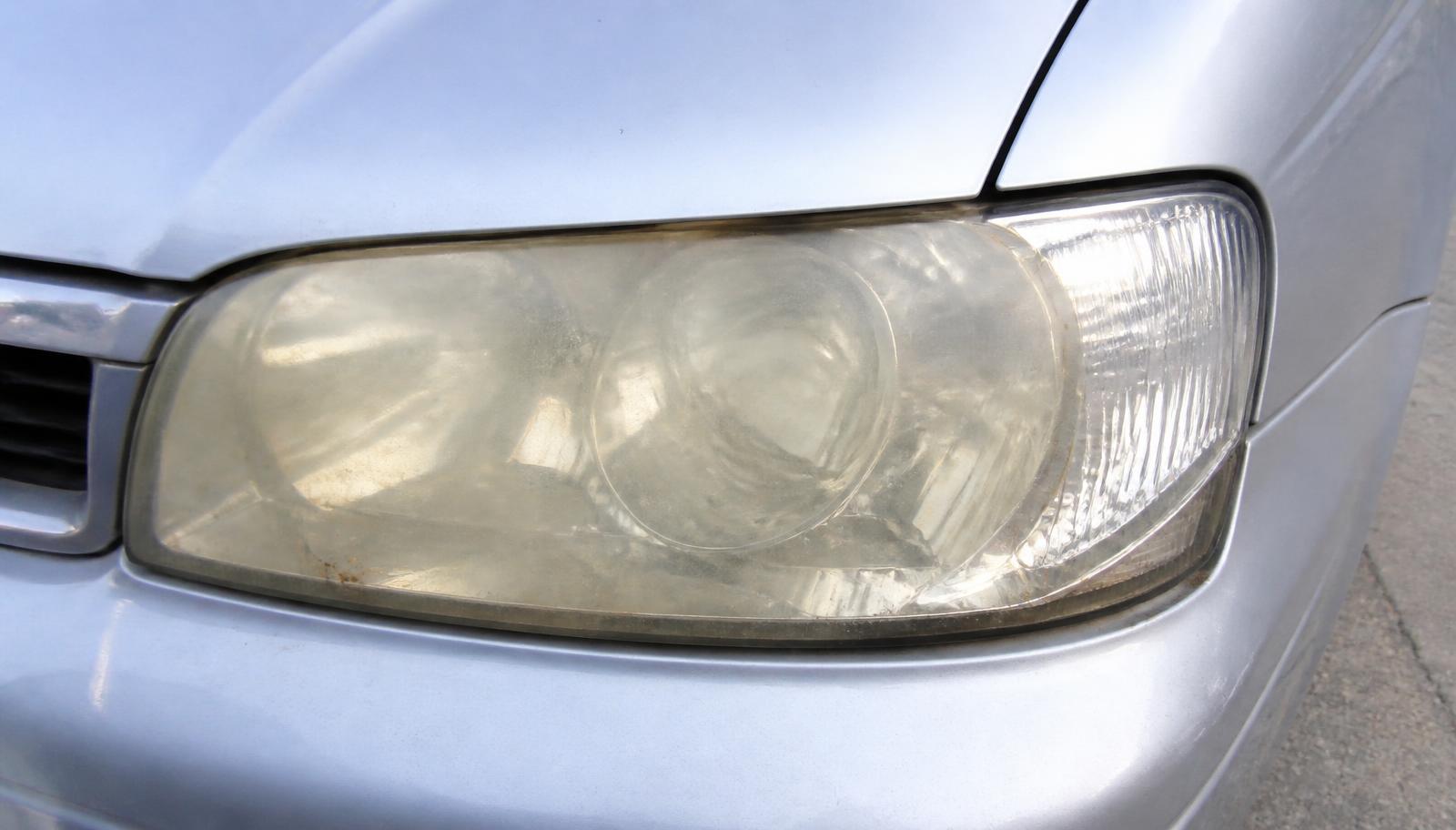
- Headlights. Spring is when you notice the haze. If they're yellowed, restoration is worth doing while everything else is being reset.
What to check yourself while you're at it
Spring is a natural inspection point. While the car is clean, look for:
- Rock chips and paint breaks, especially on the hood and lower doors. Touch them up now — bare metal exposed all summer becomes rust by next winter.
- Rust bubbling on rocker panels and wheel arches. Catching it early is the difference between a small repair and a panel.
- Clogged drain holes in door bottoms and rocker panels.
- Wiper blades and washer fluid.
- Tire condition and pressure after a winter of temperature swings. The NHTSA has straightforward guidance on tire inspection if you want a reference.
How long it takes and what it costs
Our full detail runs 3 to 4 hours and starts at $225 depending on vehicle size. After a hard winter, expect the longer end — salt extraction alone can take an extra hour on a vehicle that hasn't had interior work since fall.
If you only do one detail a year in Minnesota, make it this one. Spring detailing removes five months of accumulated corrosive material and sets up protection for the season with the highest UV load. Everything else is maintenance around it.
We come to your driveway anywhere in the Twin Cities metro — book your spring detail before the April rush fills the calendar.
Frequently asked questions
When is the best time for a spring detail in Minnesota?
Mid-April through the end of May, after the final salt applications and once overnight temperatures stay above freezing so sealants can cure properly.
Why does my car still feel rough after washing it in spring?
That texture is bonded contamination — industrial fallout, brake dust, and road film that washing can't remove. It takes a chemical decontamination wash and a clay treatment to pull it off the clear coat.
Do I need to detail the undercarriage in spring?
Yes. Salt packed into the frame rails and wheel wells over winter keeps corroding metal well into spring. A thorough undercarriage rinse is one of the most valuable steps of the whole service.
How long does a spring full detail take?
Our full detail runs 3 to 4 hours depending on vehicle size and condition. After a hard Minnesota winter, plan for the upper end of that range.
Mobile detailing, at your driveway
Serving Minneapolis, St. Paul, and the surrounding suburbs. See your exact price in under a minute.